The Definitive Guide to Luxury Multi-Generational Resorts USA Expert Analysis
.The convergence of shifting demographic structures, rising intergenerational wealth transfers, and evolving definitions of leisure has transformed the landscape of elite family travel. Coordinating travel logistics for a household cohort that spans grandparents, middle-aged adults, teenagers, and toddlers presents a formidable administrative and spatial challenge. The traditional hospitality model built around single-family hotel rooms or standardized resort footprints frequently breaks down under the weight of competing schedules, divergent physical capabilities, and conflicting psychological needs inherent in extended family dynamics.
Addressing this complexity requires properties engineered specifically to balance collective gathering spaces with private, autonomous zones. High-end hospitality developments across North America have responded by rethinking architectural layouts, service structures, and programming. Properties that successfully manage these demands do not merely offer sprawling square footage; they orchestrate a delicate equilibrium between communal integration and individual retreat, ensuring that diverse cohorts find equal value within a shared geographic anchor.
This analysis examines the structural dimensions of elite family travel estates and high-end properties. By moving past promotional marketing imagery, this exploration establishes a comprehensive framework for evaluating how spatial design, concierge systems, financial dynamics, and operational governance intersect. The goal is to provide a definitive reference point for assessing properties, anticipating friction points, and aligning resort characteristics with the long-term preferences and practical constraints of complex family units.
Understanding “luxury multi-generational resorts usa.”
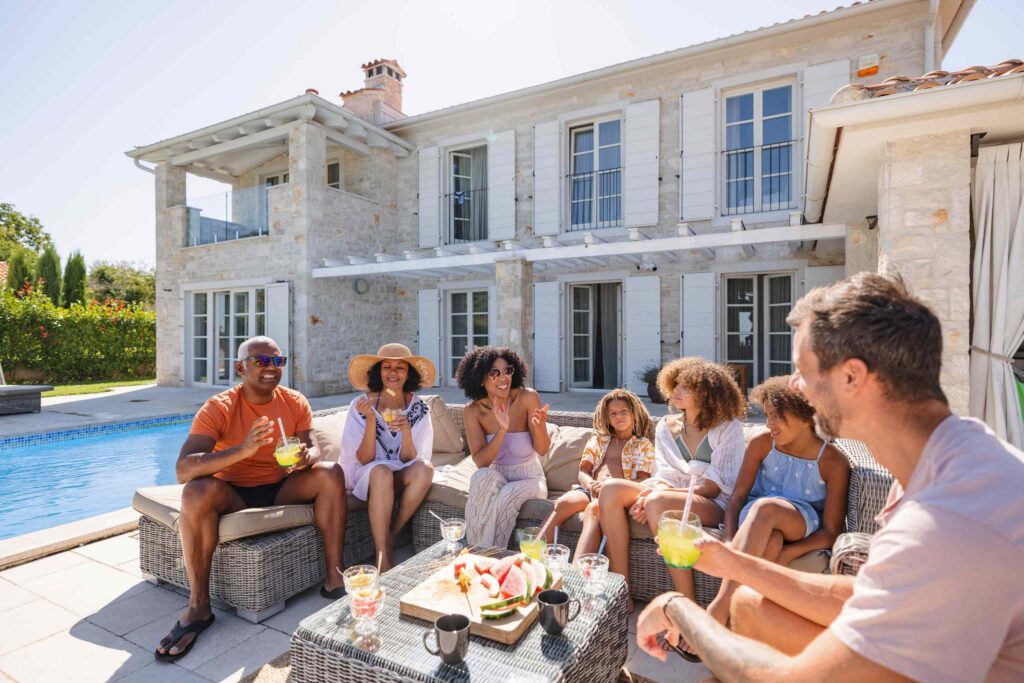
When hospitality analysts, high-net-worth wealth managers, and discerning travelers discuss luxury multi-generational resorts usa, they are pointing to a specialized sector of the hospitality industry rather than a generic collection of expensive hotels. The category encompasses sprawling ranch properties in the Mountain West, secluded island compounds in the Southeast, private-estate enclaves in New England, and multi-bedroom villa configurations within world-class desert golf resorts. A frequent error in evaluating these properties is treating them as standard luxury hotels featuring larger square footage or interconnected standard rooms.
In practice, the operational realities of these destinations require distinct architectural and service paradigms. For instance, a historic mountain ranch relies on sprawling log-timber compounds, private equestrian barns, and centralized dining lodges that accommodate entire family syndicates around massive hearths. Conversely, coastal enclave resorts in Hawaii or Florida utilize vertically integrated villa networks with private plunge pools, dedicated butler teams, and subterranean service corridors designed to maintain absolute privacy for high-profile family groups. Confusing these typologies leads to misaligned expectations, such as expecting urbanized butler service at a remote wilderness ranch or seeking pristine seclusion within a bustling coastal resort core.
Furthermore, oversimplifying the multi-generational demographic creates planning vulnerabilities. A property optimized for households with mobility-impaired grandparents characterized by single-level estate layouts, zero-threshold showers, golf cart fleets, and immediate proximity to specialized medical support differs entirely from a location tailored for families with high-energy teenagers, which typically demands multi-zone entertainment centers, independent sports academies, and acoustically isolated living areas. Understanding the term requires recognizing that successful collective travel depends on matching the structural and spatial engineering of a specific property with the precise generational composition, privacy thresholds, and logistical capacities of the traveling family.
Deep Contextual Background: The Evolution of Extended Family Hospitality
The contemporary landscape of high-end collective travel is the product of more than a century of socioeconomic transformation in American leisure, wealth distribution, and architectural design. Before the mid-twentieth century, elite family extended travel was largely restricted to the private summer compounds of the industrial aristocracy in places like Newport, Rhode Island, or the Adirondack Great Camps. These private estates were self-contained worlds where extended families gathered for entire seasons, supported by domestic workforces and isolated from commercial tourism.
The post-war economic boom and the rise of commercial aviation began to democratize luxury travel, yet the commercial hospitality sector remained stubbornly anchored to the nuclear family model. Standard hotel construction favored the double-queen room or the occasional adjoining suite, forcing extended families to fragment across disparate floors or separate buildings. This architectural limitation fostered coordination friction, eroded collective dining experiences, and complicated the care of young children and elderly family members.
In the late twentieth and early twenty-first centuries, the convergence of intergenerational wealth transfers, changing corporate retirement patterns, and the rise of experiential travel catalyzed a shift in resort development. High-end hospitality brands recognized that affluent households increasingly valued shared time over material accumulation. This realization sparked the development of branded residential villas, fractional ownership estates, and all-inclusive luxury ranches designed from the ground up to absorb large family syndicates without compromising individual comfort or privacy. Today, the sector represents one of the fastest-growing segments of luxury tourism, driven by sophisticated consumers demanding seamless integration between private family bonding and world-class institutional service.
Conceptual Frameworks and Mental Models for Collective Travel
Navigating the complexities of high-end family travel requires structured mental models that help organize spatial data and evaluate operational trade-offs. The following frameworks offer analytical lenses for assessing properties beyond promotional brochures.
The Spatial Autonomy-Integration Gradient
This model plots properties along a spectrum ranging from hyper-integrated spaces (where all family members share a single open-plan living pavilion and communal dining table) to hyper-autonomous configurations (where separate private chalets or villas are linked by landscaped pathways to a central clubhouse). Families use this gradient to diagnose their psychological and operational tolerance for proximity. High-stress family units often require high autonomy to prevent friction, while cohesive groups thrive in integrated environments.
The Service-Intermediary Index
Elite resorts differ fundamentally in how human capital is deployed to support guests. This framework evaluates a property based on its concierge and butler architecture ranging from a reactive front desk handling ad-hoc requests to proactive, dedicated estate hosts assigned to a single family group for the duration of their stay. The index measures how effectively a property absorbs the administrative labor of vacation planning, dining reservations, and activity scheduling.
The Activity-Friction Matrix
This mental model evaluates a destination based on the friction required to execute multi-age programming. High-friction environments require parents to coordinate separate logistics for toddlers, teens, and seniors across disparate locations. Low-friction environments provide centralized, simultaneous programming where a single property footprint offers concurrent fly-fishing for grandparents, equestrian lessons for teenagers, and certified nursery care for toddlers.
Typologies and Regional Variations
Elite multi-generational resort properties can be categorized into distinct regional typologies, each carrying inherent advantages, operational trade-offs, and distinct architectural profiles.
-
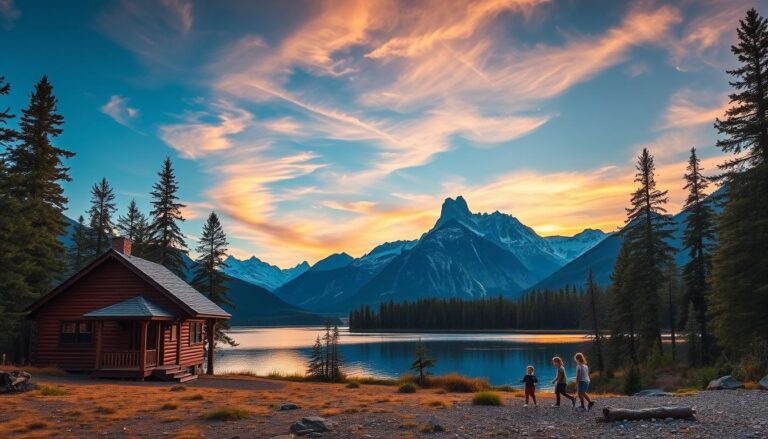
The Mountain Wilderness Ranch (Rocky Mountains & Intermountain West): Characterized by expansive timber compounds, private acreage, all-inclusive programming (riding, fishing, shooting), and communal dining lodges. Ideal for active families seeking immersive outdoor adventure combined with rustic luxury. Trade-offs include high altitude adjustment hurdles, variable mountain weather, and remote isolation from major medical facilities.
-
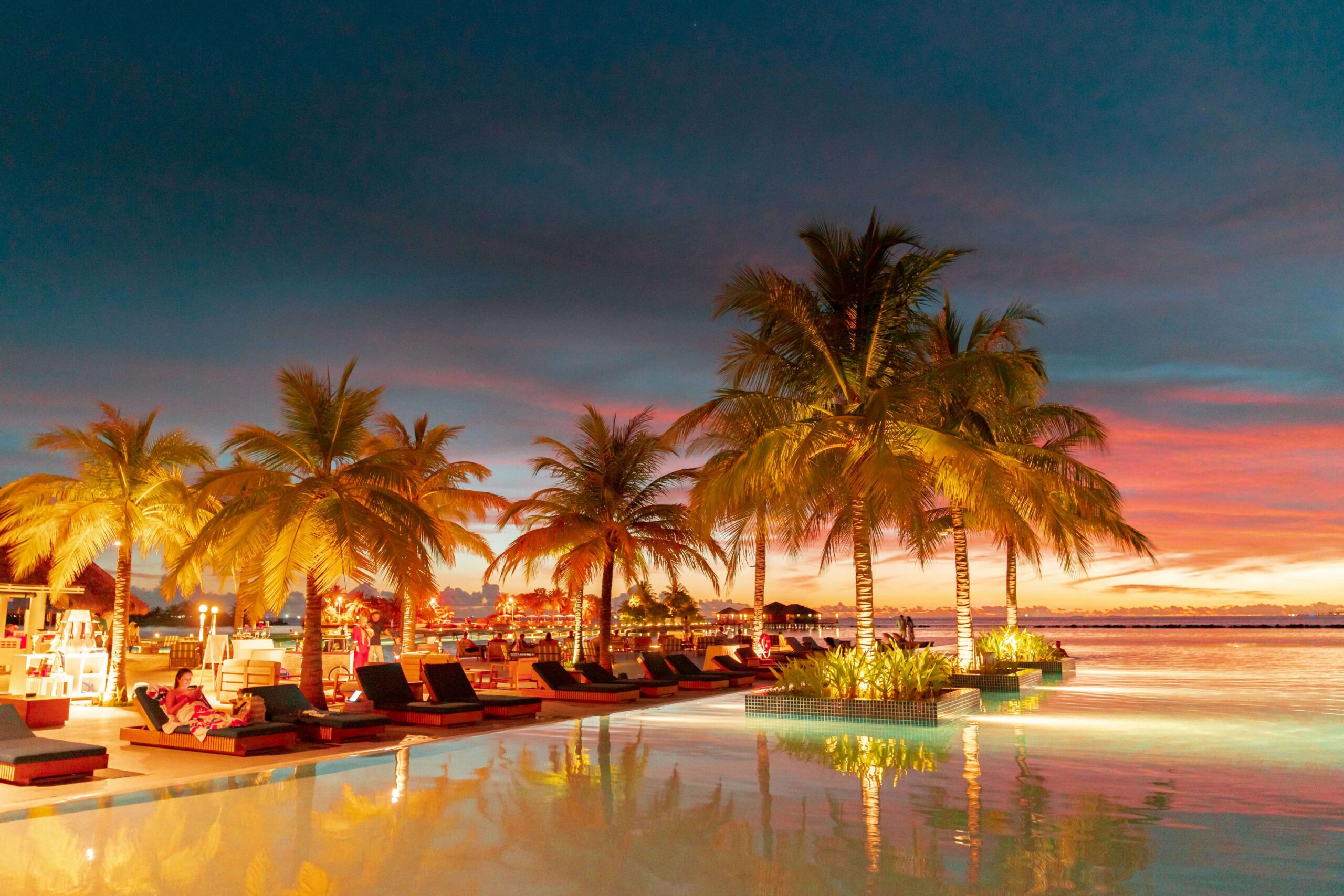
The Coastal Island Compound (Southeast & Caribbean Basin): Features private beachfront estates, maritime forests, golf and tennis academies, and dedicated yacht moorings. Highly optimized for multi-week summer gatherings with a focus on aquatic recreation and club-style socialization. Trade-offs include high seasonal humidity, vulnerability to tropical storm systems, and strict resort dress codes or club membership prerequisites.
-
The Desert Oasis and Golf Enclave (Southwest / Arizona & California): Dominated by sprawling villa clusters, private plunge pools, championship golf courses, spa villages, and arid modernist architecture. Ideal for multi-generational groups prioritizing indoor-outdoor desert living, guaranteed sunshine, and relaxed pacing. Trade-offs include extreme summer heat and highly manicured, artificial environments.
-
The Historic Coastal Estate (New England & Mid-Atlantic): Comprising historic seaside manors, private docks, clambake lawns, and walkable maritime villages. Focuses on generational continuity, sailing culture, and culinary heritage. Trade-offs include shorter seasonal windows, variable coastal fog, and historic building layouts that may feature steep staircases challenging for elderly members
Regional Typology Comparison Matrix
| Region | Primary Architectural Style | Dominant Activity Profile | Key Operational Challenge | Primary Demographic Fit |
| Mountain Ranch | Timber lodges, private cabins | Equestrian, fly-fishing, hiking | Altitude adjustment, remote medical | Active, outdoor-focused families |
| Coastal Island | Beachfront villas, Lowcountry manors | Sailing, golf, beach sports | Hurricane vulnerability, humidity | Traditional club-oriented families |
| Desert Oasis | Modernist villas, casitas | Golf, spa, private lounging | Extreme summer temperatures | Relaxed, sun-seeking groups |
| Historic Northeast | Shingle-style manors, estates | Sailing, coastal exploration | Short operational summer season | Culture and heritage-minded groups |
| Hawaiian Sanctuary | Polynesian pavilions, lanais | Ocean sports, cultural immersion | Long-haul travel logistics, jet lag | Multi-age groups seeking deep resort bubble |
| Wine Country | Vineyard villas, modern farmhouses | Culinary tours, wine tasting | Adult-centric focus, fewer teen options | Older family groups, adult children |
Detailed Real-World Scenarios
Analyzing hypothetical field scenarios illuminates how abstract property characteristics translate into practical logistical and architectural choices for extended family groups.
Scenario 1: The Multi-Age Winter Holiday at a Mountain Ranch
-
Context: A family group of twelve spanning three generations—including octogenarian grandparents, parents, and four teenagers—seeks a week-long winter gathering in the Rocky Mountains.
-
Constraints: Grandparents require low-impact mobility and heated indoor environments; teenagers require high-intensity skiing and snowboarding; parents require seamless dining coordination without kitchen labor.
-
Decision Path: The family evaluates a standard luxury ski hotel versus an all-inclusive mountain ranch with private multi-bedroom cabins and a central dining lodge. They eliminate the standard hotel because fragmented rooms prevent collective evening gatherings. They select the ranch, which provides a dedicated concierge, private ski-in/ski-out shuttle logistics, and concurrent programming for all age brackets.
-
Failure Mode & Second-Order Effects: The high altitude triggers mild altitude sickness in the grandparents during the first 48 hours, requiring an unplanned medical check and a temporary halt to physical activities. The second-order effect is the necessity of building mandatory acclimatization days into the itinerary of any high-altitude multi-generational trip.
Scenario 2: The Summer Reunion at a Coastal Island Compound
-
Context: A family group of sixteen celebrating a golden wedding anniversary at a private coastal enclave in the American Southeast.
-
Constraints: Diverse dietary requirements, varying sleep schedules between toddlers and adults, and the need for private event spaces for a formal anniversary dinner.
-
Decision Path: The family books a collection of adjoining private villas sharing a private lawn and pool, supported by a dedicated estate butler and a private chef. This configuration allows grandparents to retire early in a quiet master wing while adults and older children utilize the central living pavilion for evening gatherings.
-
Failure Mode & Second-Order Effects: A sudden severe coastal thunderstorm knocks out local grid power on the second evening. The failure mode is managed because the estate features an automated backup generator and an emergency food supply cache. The second-order effect is the realization that remote island compounds require robust industrial redundancy systems to maintain luxury service standards during extreme weather events.
Planning, Cost, and Resource Dynamics
Financial and logistical planning for elite multi-generational travel requires accounting for complex cost structures that extend far beyond baseline nightly room rates.
Direct and Indirect Cost Components
Direct costs include multi-bedroom villa rentals, resort fees, private chef services, guided excursion retainers, and specialized equipment rentals. Indirect costs frequently compound the total expenditure: mandatory private airport transfers, premium travel insurance covering multi-party medical evacuation, security retainers for high-profile families, administrative fees for custom itinerary curation, and extensive tipping architectures for dedicated butlers, private guides, and culinary teams.
Opportunity Cost and Temporal Allocation
Multi-generational travel requires aligning the calendars of working adults, school-aged children, and retired grandparents. This structural rigidity often forces families to book during peak global travel windows (holiday weeks, spring break, mid-summer), exposing them to peak pricing multipliers and low inventory. The opportunity cost involves sacrificing shoulder-season pricing advantages to secure mandatory multi-party schedule alignment.
Range-Based Cost Dynamics (Per Family Syndicate of 8–12 / Weekly Baseline)
| Expense Category | Premium Tier | Ultra-Luxury Tier | Private Estate / Compound Tier |
| Lodging (Weekly) | $15,000 – $30,000 (Multi-room villas) | $35,000 – $75,000 (Branded resort compounds) | $80,000 – $200,000+ (Exclusive private buyouts) |
| Culinary & Staffing | $5,000 – $10,000 (Resort dining, basic catering) | $12,000 – $25,000 (Dedicated private chef, butler) | $30,000 – $60,000+ (Full culinary brigade, estate team) |
| Transport & Logistics | $3,000 – $7,000 (Rental vehicles, resort shuttles) | $8,000 – $18,000 (Private van service, airport transfers) | $20,000 – $50,000+ (Private jet charters, helicopter transfers) |
| Programming & Gear | $2,000 – $5,000 (Standard resort excursions) | $6,000 – $15,000 (Private guides, curated access) | $20,000 – $45,000+ (Exclusive charters, bespoke academies) |
Tools, Strategies, and Support Systems
Executing a seamless multi-generational journey requires leveraging sophisticated technological and human support systems.
-
Private Itinerary Synchronization Platforms: Cloud-based collaboration tools utilized by estate concierges to share real-time schedule updates, dietary restrictions, and activity sign-ups across all adult family members.
-
Estate Management and Butler Portals: Proprietary property applications that allow guests to communicate instantly with assigned estate hosts regarding maintenance adjustments, temperature controls, and housekeeping timing.
-
Medical Concierge and Evacuation Networks: Membership-based emergency health services that provide direct access to telehealth pediatricians, geriatric specialists, and medical transport aircraft when traveling to remote wilderness resorts.
-
Specialized Childcare and Teen Syndicates: Certified resort-affiliated youth directors who conduct pre-arrival behavioral and interest profiles to pair young travelers with age-appropriate peer groups and mentors.
-
Private Aviation and Ground Logistics Brokers: Dedicated charter networks managing complex multi-city flight arrivals for family members originating from different geographic hubs.
-
Dietary and Allergen Management Protocols: Advanced digital profiling systems shared with resort culinary teams to track severe anaphylactic allergies and complex religious dietary laws across large groups.
Risk Landscape and Failure Modes
Collective travel involving multiple generations introduces unique operational, interpersonal, and environmental risks that can compromise the success of an excursion.
Interpersonal and Psychological Friction
The primary non-material risk is interpersonal tension resulting from enforced proximity and divergent expectations. Without adequate architectural separation and scheduled independent time, multi-generational groups frequently experience friction over pacing, financial contributions, child-rearing philosophies, and daily schedules. Failing to establish clear communication boundaries prior to departure often leads to heightened stress within the family unit.
Infrastructural and Operational Vulnerabilities
Physical risks include booking sprawling wilderness properties that lack adequate heating redundancy, backup power, or immediate proximity to advanced medical care. Operational failures involve resorts overpromising customized service while utilizing understaffed culinary or concierge teams during peak holiday periods. Relying on marketing representations without conducting direct operational audits can lead to severe service breakdowns upon arrival.
Governance, Maintenance, and Long-Term Adaptation
The quality and reliability of luxury multi-generational properties depend on rigorous asset management, cyclical capital improvements, and stringent hospitality governance.
Elite properties maintain strict maintenance schedules, conducting annual infrastructure overhauls during low-demand shoulder seasons. This includes refreshing soft goods, upgrading smart-home automation systems, servicing industrial HVAC and backup power generators, and maintaining specialized recreational assets (such as equestrian stables, marine docks, and golf course drainage systems).
For the discerning consumer, evaluating a property’s governance involves reviewing its management stability, staff retention rates, and environmental sustainability practices. Selecting resorts committed to long-term resource stewardship and fair labor practices ensures that the property maintains its operational integrity and service culture over decades.
Measurement, Tracking, and Evaluation
Assessing the efficacy of a luxury multi-generational trip requires sophisticated evaluative metrics that measure both subjective satisfaction and objective operational performance.
-
Leading Indicators (Pre-Trip Alignment): Tracking the completion of pre-arrival preference forms, verifying dietary and medical protocol transmissions, and confirming seamless private logistics coordination before departure.
-
Lagging Indicators (Post-Trip Synthesis): Evaluating whether all generational cohorts reported high personal satisfaction, assessing whether the financial outlay matched the experiential value, and documenting any operational friction points for future travel planning.
-
Qualitative vs. Quantitative Signals: Quantitative metrics include tracking unexpected out-of-pocket add-on expenses and schedule adherence rates. Qualitative signals encompass family cohesion assessments, stress-level feedback from primary organizers, and the memorability of shared milestone events.
Common Misconceptions and Oversimplifications
-
Myth: Any luxury hotel with large suites can function effectively as a multi-generational resort.
-
Correction: Standard luxury hotels lack the private communal living spaces, estate-style dining configuration, and acoustic separation required for large family syndicates.
-
-
Myth: All-inclusive luxury ranches and resorts restrict freedom and impose rigid group schedules.
-
Correction: Top-tier properties operate on à la carte flexibility models where activities, dining times, and private guides are customized entirely around individual family preferences.
-
-
Myth: Booking separate standard rooms in the same hotel achieves the same result as a multi-bedroom villa estate.
-
Correction: Fragmented room allocations destroy the central gathering dynamic, complicating supervision of young children and eliminating shared living room environments.
-
-
Myth: Remote wilderness resorts offer the same level of medical infrastructure as urban luxury hotels.
-
Correction: Many iconic mountain and island estates are hours away from major medical centers, requiring specialized private emergency evacuation planning.
-
-
Myth: High cost automatically guarantees flawless service execution during peak holiday weeks.
-
Correction: Peak holiday periods frequently strain even the finest resort properties, making pre-arrival communication and dedicated estate hosts essential for maintaining service standards.
-
-
Myth: Multi-generational travel requires uniform participation in every daily activity.
-
Correction: The hallmark of a successful trip is the ability for family members to disperse into independent pursuits and reconvene seamlessly for shared evening meals.
-
Ethical, Practical, and Environmental Considerations
Engaging with elite resort properties carries an implicit responsibility to respect local ecological and socio-economic systems. Sprawling estates, golf courses, and private island compounds place heavy demands on local water tables, energy grids, and municipal infrastructures. Furthermore, large-scale tourism developments frequently impact local housing markets and service labor ecosystems in rural or island economies. Approaching these destinations with an awareness of their environmental footprint and supporting properties that invest in renewable energy, water conservation, and fair local employment ensures responsible stewardship of high-end travel assets.
Conclusion
Orchestrating multi-generational travel at the highest tier of the hospitality market requires navigating a complex intersection of spatial architecture, logistical engineering, and interpersonal dynamics. By moving beyond surface-level amenities and applying rigorous conceptual frameworks such as the Spatial Autonomy-Integration Gradient and the Service-Intermediary Index, families can align their unique generational composition with the appropriate resort environment. Whether selecting a timber ranch in the Rockies, a coastal compound in the Southeast, or an island sanctuary in Hawaii, the enduring success of collective travel relies on thoughtful property selection, operational foresight, and a balanced commitment to both shared community and individual autonomy.