Compare Multi-Generational Travel: A Strategic Logistics Guide
The orchestration of collective leisure for a kinship group is an exercise in complex systems management. It requires reconciling disparate physical capabilities, intellectual curiosities, and biological rhythms into a single, cohesive itinerary. When successful, these endeavors foster deep social cohesion. When executed without rigorous structural foresight, they frequently devolve into compromised expectations and administrative exhaustion. The fundamental challenge does not reside in the destination. It lies in the sophisticated management of the interpersonal and logistical friction inherent in group transit.
True mastery in this domain necessitates moving beyond the standard industry advice of finding a singular activity to satisfy everyone. That approach is structurally flawed. It often results in a schedule so diluted that it fails to provide genuine depth for any individual involved. Instead, the focus must shift toward the creation of a “modular itinerary.” In this design, the group functions as a flexible entity, capable of both collective engagement and individual autonomy. This strategy requires a profound understanding of resource management, behavioral psychology, and the systemic constraints of the global hospitality market.
This discourse serves as a definitive reference for those tasked with organizing these complex endeavors. By dissecting the structural underpinnings of group dynamics and logistical planning, the following analysis provides the conceptual frameworks necessary to orchestrate travel that remains both meaningful and manageable. The intent is to move beyond superficial recommendations and provide a blueprint for the long-term strategic planning required to navigate the inherent challenges of collective journeys in an increasingly volatile travel environment.
Understanding “Compare Multi-Generational Travel.”

The phrase “compare multi-generational travel” is frequently misused as a simple directory of child-centric resorts or standard sightseeing tours. This represents a fundamental categorization error. True utility in this space is defined by the convergence of accessibility, psychological autonomy, and logistical redundancy, rather than the mere aggregation of amenities at a single property.
When professionals discuss these plans, they refer to the specific friction points in group travel that can be mitigated through structural design. This includes the management of “group paralysis,” where decision-making stalls due to excessive variables. It also involves the mitigation of “energy asymmetry,” where the disparate stamina levels of participants threaten the integrity of the collective schedule. Misunderstandings proliferate when organizers conflate “proximity” with “experience.” A high-end resort may offer impressive infrastructure, but a truly superior experience is often provided by a destination that allows for the fluid realignment of group members throughout the day. This ensures individuals can pursue their interests without sacrificing the security of a unified base of operations.
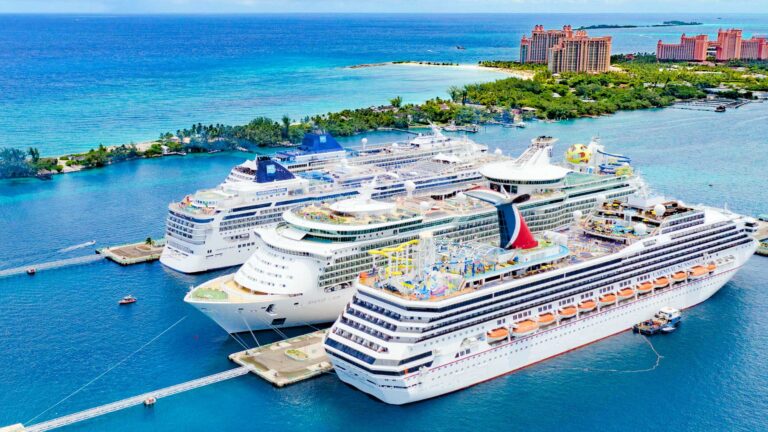
The danger of oversimplification lies in the “togetherness fallacy,” where the desire for constant proximity overrides the biological necessity for individual downtime. A benchmark for excellence is found where the destination’s infrastructure supports spontaneous subgrouping. This could be a multi-bedroom villa complex for the kinship clan or a maritime itinerary with diverse onboard activity tracks. By moving past the superficial metrics of age-appropriateness, planners can better utilize the insights gained when they compare multi-generational travel methodologies to solve real-world logistical challenges. This ensures their itinerary is as resilient as the group it serves.
Deep Contextual Background: The Evolution of Group Transit
The systemic evolution of collective travel has shifted from the rigid, itinerary-driven models of the twentieth century to the current era of “distributed autonomy.” Initially, group travel was defined by centralized coordination, where movement was synchronous, and options were constrained. Today, the infrastructure has pivoted toward high-density, multi-purpose environments that accommodate diverse needs within a singular operational footprint.
This shift occurred because affluent, multi-generational groups prioritize “time-equity” over raw cost-savings. The modern traveler understands that the scarcity of shared time is the true cost, not the fiscal outlay for the transit itself. Consequently, the hospitality market has bifurcated. Traditional hotels are being supplemented by the rise of institutional-grade private villa networks. Cruise lines have rebranded into “floating modular ecosystems,” where participants navigate a shared trajectory while remaining entirely detached from one another’s daily agendas.
This institutional shift means that to compare multi-generational travel options effectively, one must look at their “modular capacity.” The modern expectation is not for a single shared experience. It is for a high-functioning hub from which various members can iterate their own itineraries while retaining the security and convenience of a unified base of operations.
Conceptual Frameworks and Mental Models
To manage these assets effectively, one must adopt specific mental models that prioritize stability over spontaneity:
-
The Energy-Asymmetry Model: Acknowledge that the group’s “pace-setter” is the individual with the lowest endurance. The schedule must be engineered around this participant. Use “satellite activities” to keep high-energy members engaged without forcing the group to fracture.
-
The Logistical Redundancy Principle: Every critical component of the trip—transportation, accommodation, dining—must have a backup configuration. When group size exceeds six individuals, the probability of a singular point of failure necessitates a “shadow itinerary” for the entire group.
-
The Autonomy-Integration Ratio: This measures daily time spent together versus time spent apart. For a trip longer than four days, the ideal ratio is approximately 60% integrated and 40% autonomous. This maintains the social benefit of the gathering while preventing the exhaustion caused by forced proximity.
-
The Decision-Velocity Framework: To prevent paralysis, designate a single “logistics lead” for specific days, while rotating the leadership role. This ensures that the burden of decision-making is distributed and minimizes the systemic inertia common in large groups.
Categories of Variation: Taxonomy and Trade-offs
| Category | Primary Focus | Trade-off |
| Villas/Private Base | Total control, autonomy | High setup/maintenance effort |
| Full-Service Cruising | Logistical ease, variety | Limited depth of experience |
| All-Inclusive Resort | Predictability, low-stress | Potential for “facility-cabin fever” |
| Guided Private Tour | High engagement, complexity | Lack of spontaneous flexibility |
Realistic decision logic dictates that when you compare multi-generational travel styles, you must match the infrastructure to the group’s “friction threshold,” the degree of stress they can collectively absorb before the dynamic degrades. If the group is prone to decision-making conflicts, prioritize high-infrastructure environments like cruises or resorts. If the group values high social intimacy, prioritize private villa rentals.
Detailed Real-World Scenarios
-
The High-Energy Clan: A group involving young children and athletic adults. The constraint is extreme energy asymmetry. Strategy: A base-camp model in a region with varied outdoor activities, allowing for split-day excursions.
-
The Mobility-Restricted Cluster: A group with participants requiring assistance. The primary constraint is physical accessibility. Strategy: A cruise or high-end resort with internal transit systems and ADA-compliant infrastructure.
-
The Intellectual Collective: Focus on cultural or historical immersion. Strategy: An urban hub that offers high-density cultural access, allowing participants to attend different lectures or tours without needing group transit.
-
The “Third-Culture” Reunion: Diverse geographic origins. Strategy: A neutral, central geography that requires minimal intercontinental flight legs for any party, reducing the systemic risk of long-haul travel delays impacting the start of the trip.
Planning, Cost, and Resource Dynamics
| Factor | Low-Complexity (Resort) | High-Complexity (Villa) |
| Cost Predictability | High | Low (Hidden operational costs) |
| Planning Lead Time | 3–6 Months | 9–18 Months |
| Opportunity Cost | Fixed | Dynamic (Market-dependent) |
Direct costs, such as lodging, must be treated as “foundational” rather than discretionary. As you compare multi-generational travel logistics, remember that hidden indirect costs, such as the orchestration of ground transportation for disparate flight arrivals,s often exceed the projected budget if not accounted for during the initial planning phase.
Tools, Strategies, and Support Systems
-
Synchronized Calendaring: Utilize non-invasive digital tools for major milestones only, leaving granular daily scheduling to oral tradition to reduce pressure.
-
The “Shadow Logistics” File: A centralized digital repository containing all passports, emergency contacts, insurance policies, and reservation confirmations, accessible to the primary organizers.
-
The Buffer Zone: Intentionally integrate a “nothing-scheduled” afternoon into every 48 hours to account for the inevitable fatigue or unexpected logistical shifts.
-
Ground-Transit Vetting: Always secure private, pre-arranged transport for group movements, as coordinating simultaneous arrivals across multiple platforms is a known failure point.
Risk Landscape and Failure Modes
The primary risk when you compare multi-generational travel is the “Synchronous Collapse,” where an entire group’s mood or logistical path fails due to a singular mismanaged event. A secondary risk is “The Invisible Labor Gap,” where one participant performs the vast majority of the organizing, leading to resentment and burnout. Compounding risks occur when groups fail to define a clear communication protocol regarding fiscal expectations, leading to friction during common-expense settlements.
Governance, Maintenance, and Long-Term Adaptation
Maintain a “Layered Checklist” for all organizational assets:
-
Pre-Departure Review: Reconfirm all accessibility and dietary requirements 14 days before transit.
-
Daily Post-Mortem: Conduct a brief, low-stakes check-in during dinner to adjust the following day’s plans based on the group’s collective energy level.
-
Triggered Reassessment: If group discord is detected during the first 24 hours, unilaterally implement an “autonomy shift,” mandating that the next day be entirely free for individual activities.
Measurement, Tracking, and Evaluation
Evaluation should rely on both qualitative and quantitative indicators. A leading indicator is the “complexity score” of the daily plan—if the plan requires more than three coordinated transfers for the group, it is likely to fail. Qualitative signals include the “noise of arrival”—if the group retains social cohesion at the end of the final day, the trip is a qualitative success.
Common Misconceptions and Oversimplifications
-
Myth: “Everything must be planned together to be a ‘real’ family trip.”
Correction: When you compare multi-generational travel experiences, the most successful ones are those that provide individual fulfillment, which is then shared socially later. -
Myth: “Larger groups always save money on logistics.”
Correction: Larger groups introduce ‘friction-costs’ that frequently outweigh the per-person savings of shared rentals. -
Myth: “The most expensive destination is the safest bet.”
Correction: Expensive environments have high expectations that, when unmet, lead to greater dissatisfaction than modest, well-managed settings.
Conclusion
The effort to compare multi-generational travel is an exercise in managing human variability. By viewing these endeavors as dynamic logistical ecosystems rather than static vacations, organizers can build a system that facilitates connection while mitigating the inherent stress of group movement. Success is not found in the perfect itinerary, but in the disciplined management of the group’s expectations, the intentional creation of space for autonomy, and the graceful adaptation to the inevitable disruptions of collective travel. Mastery in this space is a lifelong process of iteration, reflecting the dynamic nature of both family development and the institutional offerings designed to accommodate it.